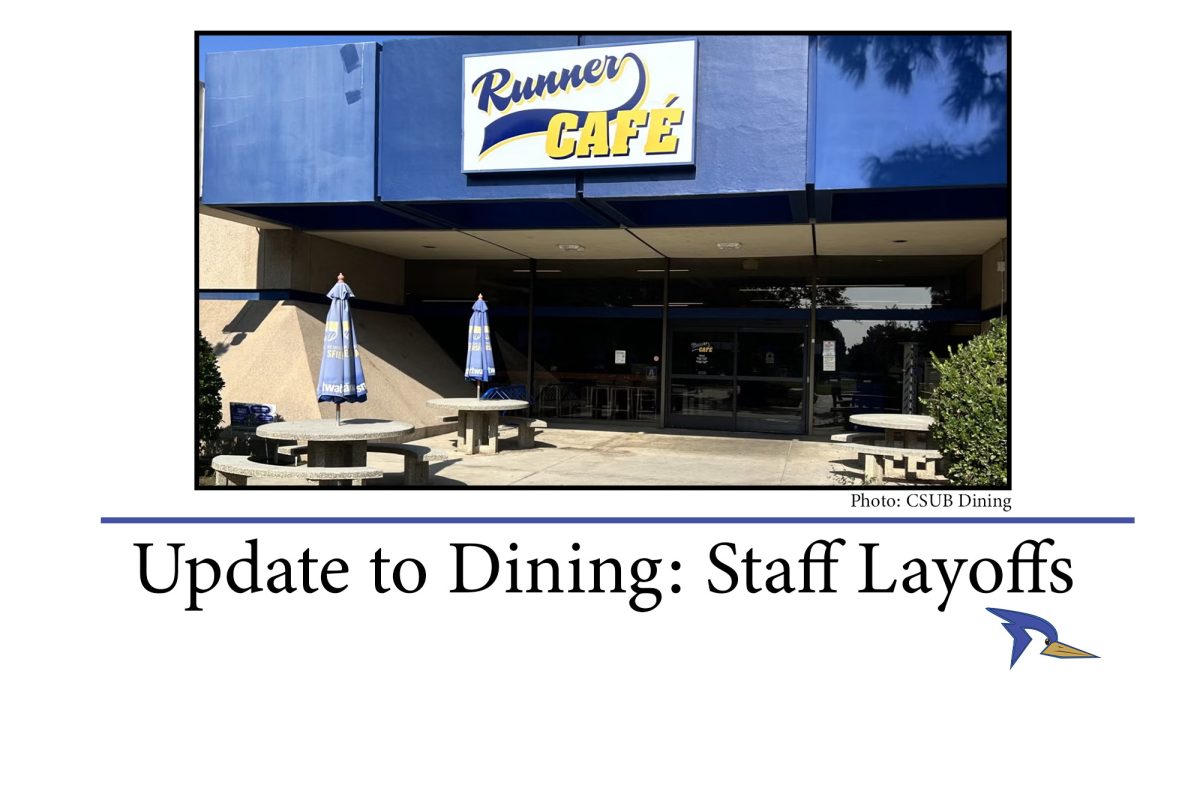
Cal State Bakersfield will have new dining options effective this summer and be fully implemented by Fall 2026. On April 8 students, staff and faculty received an email from Dr. Kristen Watson, chief of staff to the president, explaining that major changes were coming to all dining locations on campus.
CSUB will be transitioning from Aramark to a partnership with the Kern County Superintendent of Schools. The goal with this new partnership according to Watson is to better enhance campus dining experiences with more student-centered and healthier food options.
The changes will be the following:
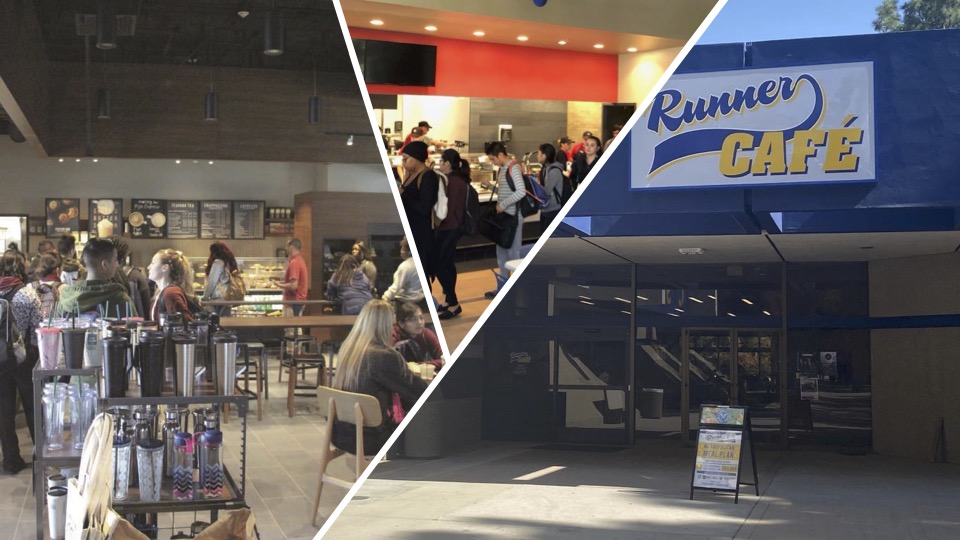
- Runner Café – featuring Mexican grill, Italian fare, and globally inspired offerings
- Cafecito & Bakery (currently Starbucks) – artisan coffee, pastries, deli wraps, and protein-forward grab-and-go options
- Local Fare & Taste (currently Bento) – a fresh market concept with pay-by-the-ounce offerings and an emphasis on local sourcing
- World in a Bowl (currently Panda Express) – customizable globally inspired grain, protein, and vegetable bowls
- A new residential dining component at Housing East offering daily continental and hearty breakfast options supported by smart vending and grab-and-go solutions
Going forward, all university dining options and community events on campus will be served by KCSOS. New dining locations will have expanded dining hours and increased late-night and weekend services, allowing students flexibility in getting food.
“The Partnership emphasizes affordability, menu variety, operational flexibility, and responsiveness to student needs,” wrote Watson.
Felicia Low, a nursing major, is for the changes coming to campus dining.
“Increased hours mean more chances to actually go to the food places, Low said.
Low resides in the dorms on campus and feels the increased operating hours can better work around her busy schedule. She is also interested in the new varied food options coming.
Melanie Carvajal, a pre-health/nursing major is happy with the potential changes to places like Starbucks and Panda, but is concerned that the prices of the food may increase. With the increase in parking permits and gas prices, Carvajal states that if the prices of food go up too, she will start making food from home.
Similar concerns were brought up by Ricky Ruiz, a sociology major. He is not excited about the removal of Starbucks. Like Carvajal, Ruiz brought up concerns with the increasing prices of food stating, “does anyone want to pay for high price food?”
Luna Valle, an art major is in favor of some of the changes. She wishes for the Panda and Starbucks locations to remain open, and the new healthier locations to open up in different locations on campus. She is in favor to push for healthier food options, but not for getting rid of the old locations.
In an email, Watson stated the decision to change the current campus dining came from the higher levels of CSUB, and from a desire to rethink the dining experience at CSUB. The feedback they had received from students was centered around variety, better value, healthier options, and operating hours. The current set up for Campus Dining would not allow for these changes happen.
As Watson wrote, “with the current agreement with Aramark coming to an end, it gave the University an opportunity to take a step back and ask what dining should look like moving forward—not just maintain what we had.”
Watson mentioned that before making a final decision, CSUB took considerable efforts to research better alternatives to Aramark to achieve their new goals. They studied the dining services systemwide and reached out to several large institutional food operators.
In the end, the Kern County Superintendent of Schools showed interest in creating a more mission-driven, high-quality, cost-effective meal program. This would offer flexibility for CSUB to achieve the new goals it has set for itself for campus dining.
With all these changes, Watson confirms that “beyond the concepts themselves, some of the biggest changes are operational: longer hours (including late nights and weekends), more flexible meal plans, and a stronger emphasis on affordability. We’re also building in more ways for students to directly shape the program—through feedback, events, and partnerships with student organizations—so it can evolve over time instead of staying static.”