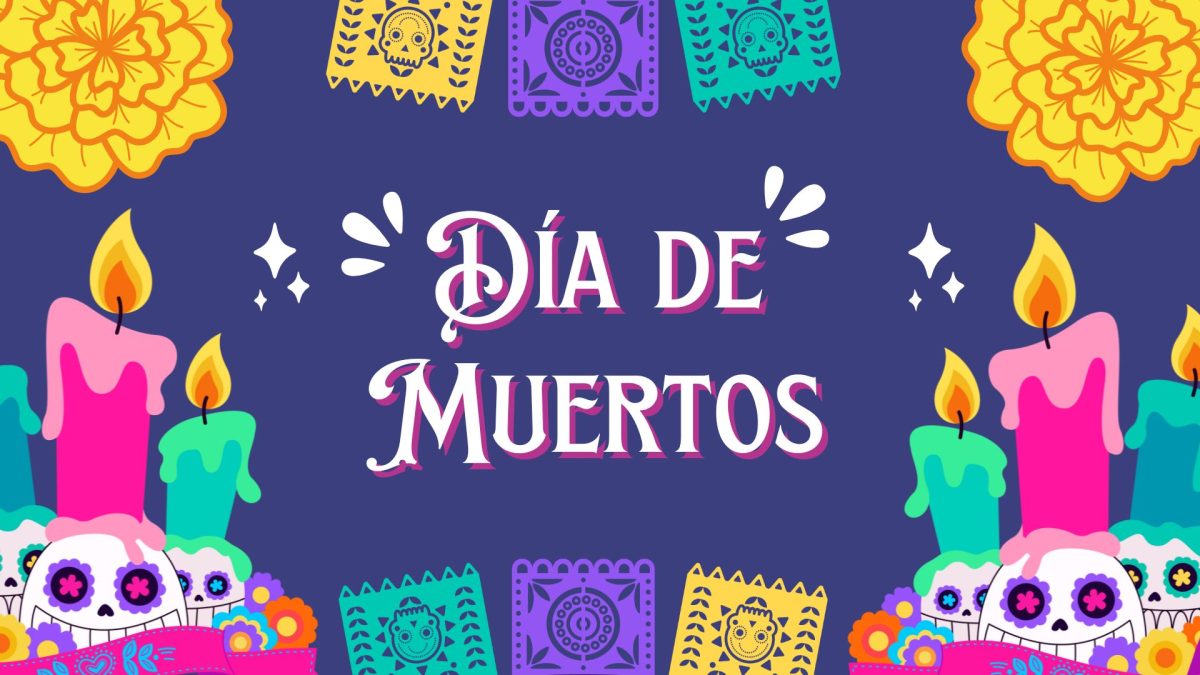
The Day of the Dead or Día de los Muertos is a Latin holiday where families welcome back the souls of their deceased relatives for a brief reunion that includes food, drinks and celebration. It’s a time to honor and remember loved ones who have passed away.
There are different ways of celebrating the day, although it’s a holiday based on Mexican roots, different states in Mexico celebrate it differently in things such as offerings and the way they decorate.
“We have to put out water for our loved ones who have passed, and the little pan de muerto bread,” said Daniela Robledo, master’s student for student affairs – counseling education. “I also have little alebrijes. When my mom or I go to Mexico, she always brings me one, so I keep them on my ofrenda as well.”
Alebrijes are brightly colored, handcrafted figures that represent fantastic or imaginary beings, combining parts of different animals. For example, a dragon with butterfly wings or a dog with a fish tail.
Rosemary Rivera, a Spanish masters student and a junior-high teacher, shared that she has her students do a Día de los Muertos project in which they bring candles and different decorations.
“We create our own altar in the classroom and use it to help all students understand what Día de los Muertos is,” said Rivera.
Many people dedicate their offering to someone special. While the altar or ofrenda honors all those who have passed away, some families decide to make it more personal by dedicating it to a specific loved one who held a special place in their lives, turning the ofrenda into a heartfelt tribute that keeps their memory alive.
Although the ofrenda is usually dedicated to one particular person, it represents a broader act of remembrance. Families include objects and foods that were meaningful to that person, but the overall celebration honors all the departed and keeps their memory alive.
This year Robeldo has two people on her ofrenda. One is her aunt who was close to her in age and was killed in 2005 due to domestic violence. The other is her husband’s grandfather, who passed away last April.
“This celebration began in Mexico and is now also celebrated in other parts of the world, as people who live in Mexico migrate to other parts of the world,” said Dr. Marco Antonio Huerta Alardín, assistant professor of modern languages and literature.
Today, Día de los Muertos is celebrated in many countries around the world, though each country has its own traditions and customs. While some aspects of the celebration, such as creating altars and honoring deceased loved ones are shared, not all countries celebrate it the same way as in Mexico. Local cultures often adapt the holiday, combining it with their own customs, foods and rituals, which creates unique variations of this centuries-old tradition.
“Europeans, particularly the Spanish, recognized the significance of this date within the Catholic tradition,” Huerta said. “Spanish friars understood the importance of honoring the dead, so much so that it was included in the Catholic calendar, with each day dedicated to a saint. The day after All Saints’ Day, Nov. 1, became a way for Indigenous people in the Americas to continue celebrating their own traditions while also observing aspects of Catholicism.”
The Day of the Dead is celebrated on Nov. 1 and is a part of a larger tradition that spans throughout several days. The celebration begins on Oct. 27 and continues through Nov. 2 with various community events.
Here’s a list of the dates and what is celebrated each day:
Oct. 27: Families remember their deceased pets.
Oct. 28: Honor those who died suddenly or tragically.
Oct. 29: Pray for the forgotten souls who have no one to remember them.
Oct. 30: Dedicated to the souls of unbaptized children.
Oct. 31: All Souls’ Day: honoring children who have passed away.
Nov. 1: All Saints’ Day: families celebrate the spirits of children visiting their homes.
Nov. 2: All Souls’ Day: honoring the spirits of adults