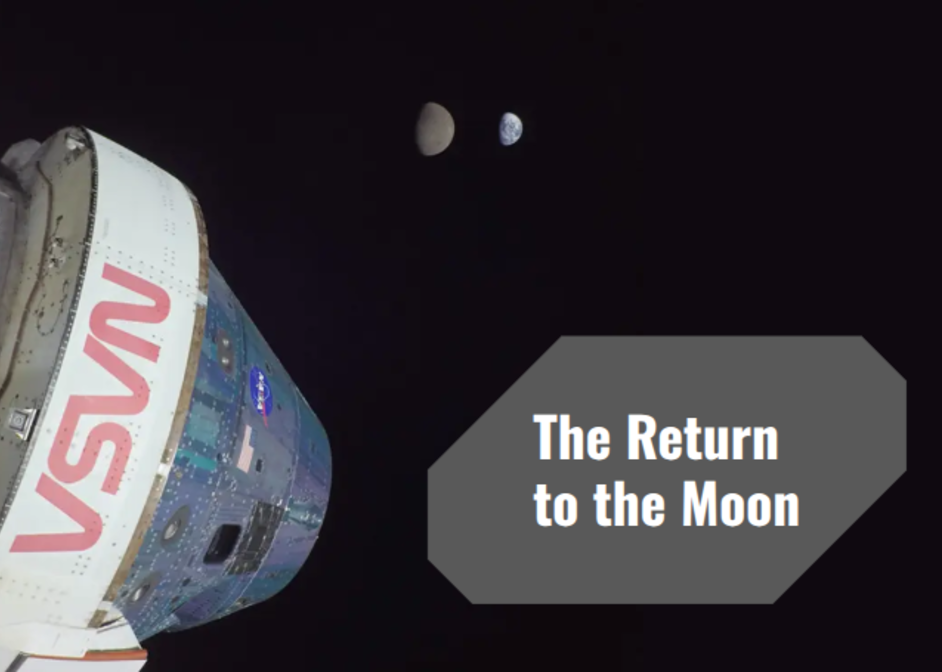
For the first time in more than half a century, the National Aeronautics and Space Administration astronauts are preparing to circle the moon. The Artemis II mission is scheduled to launch this April. The launch and subsequent 10-day flight will mark the first crewed mission outside Earth’s orbit since the Apollo missions.
According to “What is the Artemis Program?” written by Amanda Laughead, the Artemis II mission will conduct a flyby around the moon to test the capabilities of the new Orion spacecraft and its systems. Another key objective will be the testing of the new Orion Crew Survival System spacesuits. The Orion spacecraft was constructed by Lockheed Martin and can transport four astronauts around the moon. The new spacecraft will be attached to the powerful Space Launch System (SLS), which produces 15 percent more thrust than the Saturn V rockets used during the Apollo missions.
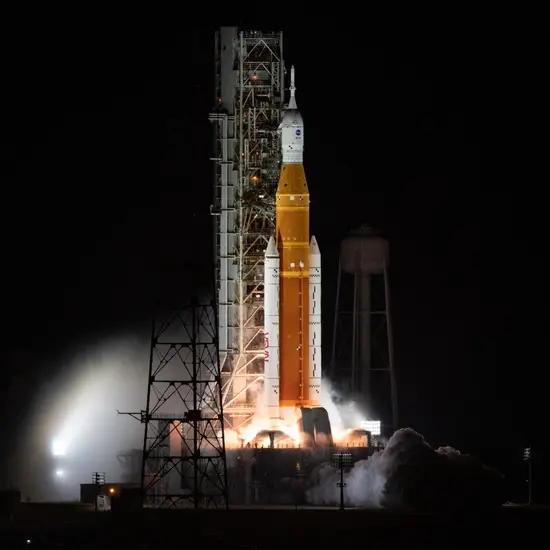
(Artemis I launching from the Kennedy Space Center on Wednesday, November 16, 2022: https://airandspace.si.edu/stories/editorial/what-artemis-program)
When discussing the SLS’s modular design, Laughead states, “It can also be configured into various “blocks” depending on the needs of the mission, making it more adaptable than its Saturn V counterpart from the Apollo missions.”
All this development has required a significant amount of funding. According to Rachel Lindbergh’s article, “Artemis: NASA’s Program to Return Humans to the Moon,” the United States Congress has provided $7.8 billion for the Artemis systems, with an additional $6.7 billion allocated for the Orion, the Gateway station, and SLS platform. The crew for this historic flight includes Reid Wiseman (commander), Victor Glover (pilot), Christina Koch (mission specialist), and Canadian astronaut Jeremy Hansen (mission specialist), according to Laughead. However, the mission’s importance extends beyond sending astronauts back to the Moon. Artemis II represents the potential future for lunar missions going forward.
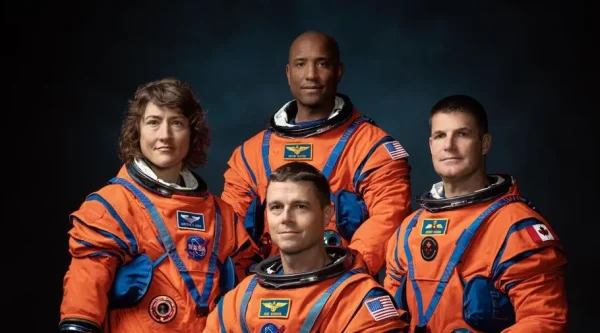
(The Artemis II crew: Reid Wiseman, Victor Glover, Christina Koch, and Canadian astronaut Jeremy Hansen: https://airandspace.si.edu/stories/editorial/what-artemis-program)
Under the Apollo program, NASA successfully landed 12 men on the moon between the years of 1969 to 1972. Today, NASA aims to go further.
As Laughead explains, “In Greek mythology, Artemis is the daughter of Zeus and the twin sister of Apollo. Choosing Apollo’s twin sister as the name for NASA’s second human lunar exploration program emphasizes how this endeavor is related to–but unique from–the Apollo Program.”
According to Dacia Massengill in the post “Artemis,” the Artemis I launch was an uncrewed flight test designed to stress test the SLS rocket and Orion spacecraft. NASA successfully launched the Artemis I on Nov. 16, 2022, and it returned safely to Earth on Dec. 11. Artemis II builds on that success by sending a four-member crew around the Moon. If successful, NASA will be able to move forward with Artemis III and IV missions.
The Artemis III mission will see astronauts landing on the South Pole of the Moon and spend a week conducting scientific research.
According to Laughead, “the Artemis III science program includes research on the effects of deep-space radiation on the human body, geological activity known as “moonquakes,” and plant growth off world.”
Following that mission, Artemis IV will focus on the construction of the lunar space station named Gateway. As the Gateway station orbits around the Moon, it will act as a research hub and staging platform for future missions to Mars, according to Massengill.
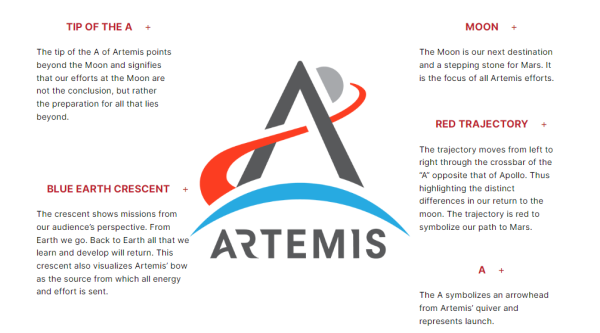
(The Artemis mission logo, and the story each part tells: https://www.nasa.gov/humans-in-space/artemis/)
Currently, the Artemis II launch has been postponed from Feb. to sometime in April due to mechanical issues discovered during the Wet Dress Rehearsal on Jan. 31. According to Rachel H. Kraft’s report, “NASA Conducts Artemis II Fuel Test, Eyes March for Launch Opportunity,” cold temperatures caused a delay in tank operation, engineers also identified a liquid hydrogen leak, as well as a loose pressurization hatch connected to the Orion crew module. No injuries were reported, and the issues have been resolved.
If Artemis II launches successfully this spring, it will not only mark humanity’s return to deep space, but also open the door to a new era of lunar exploration.