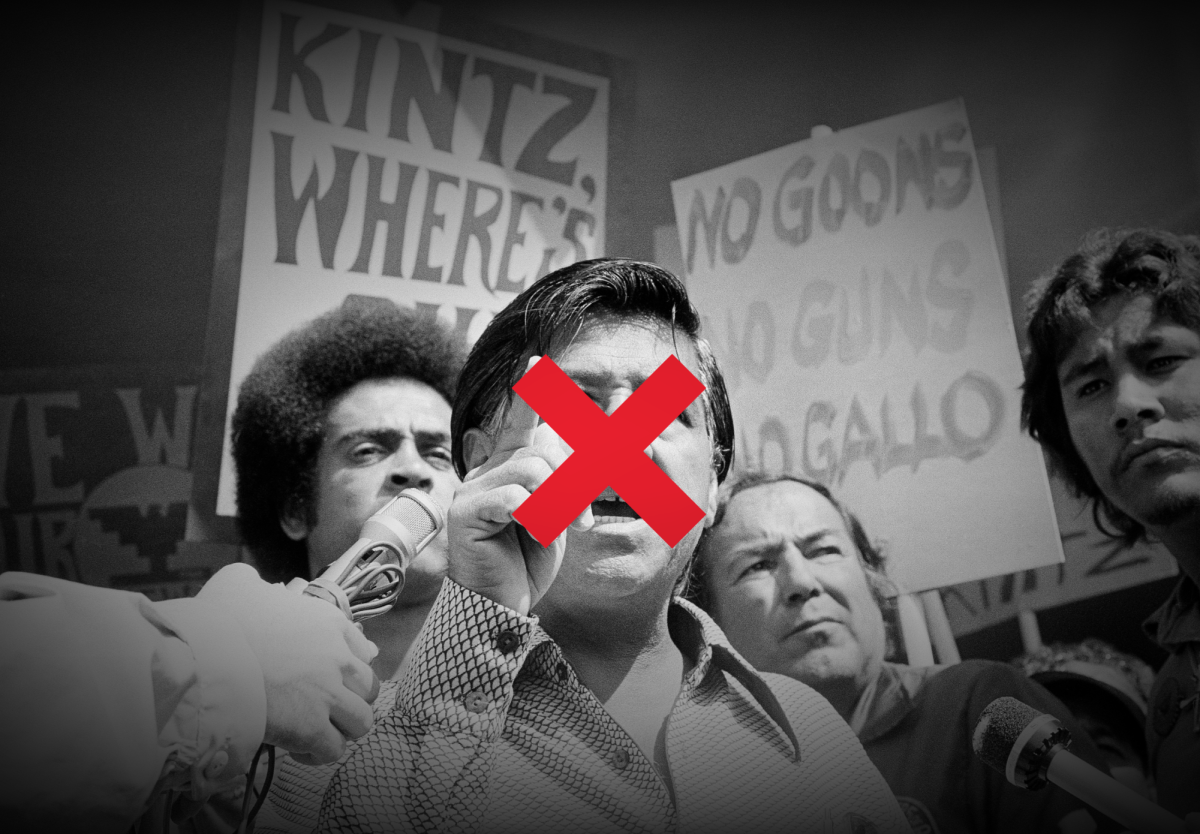
Today is March 31, and Californians are commemorating Farmworkers Day for the first time. This day formerly honored political activist Cesar Chavez’s birthday and his many contributions to the United Farmworkers movement.
Yet, recent allegations have sullied his legacy.
In a story published by the New York Times on March 18, Chavez was accused of committing sex crimes against women and children: two girls, who were daughters of UFW leaders, and fellow activist Dolores Huerta. This all reportedly occurred during the 1960s and 70s – in the prime of Chavez’s labor activism.
In the Central Valley, the backlash has been swift and tremendous. Kern County, specifically Delano, was the historic center of the UFW movement and Chavez’s activism. These new developments strike devastatingly close to home.
From Cal State Fresno removing their statue of Chavez, to the Delano Joint School District voting to rename Cesar E. Chavez High School, and Bakersfield terminating their street renaming project, various local institutions are reflecting a broader pattern of national outrage.
In an era shaped by the #MeToo movement, Americans are no longer overlooking powerful figures and their actions. Instead, we want accountability and justice from leaders.
As a woman in the Central Valley, witnessing the nation’s response is incredibly refreshing. Some might argue the country is moving too swiftly based on accusations, but listening to victims and giving them an outlet to speak up is essential. For so long, victims of sexual crimes have been uncomfortable sharing their stories for numerous reasons, such as fear of retaliation or compromising on their own goals.
“I believed that exposing the truth would hurt the farmworker movement I have spent my entire life fighting for,” Huerta said in a statement on March 18.
Through community and national action, we’re able to highlight what the UFW was about in the first place: dignity, respect, and justice for farmworkers. Chavez’s legacy may be tarnished, but his actions don’treflect on the movement itself. During this time, it’s important to highlight the ordinary folks who painstakingly work to provide for their families – and feed our own in the process.
From laboring under harsh conditions to being exposed to dangerous pesticides, we must acknowledge their sacrifices instead of placing the successes of a movement on the shoulders of one man.