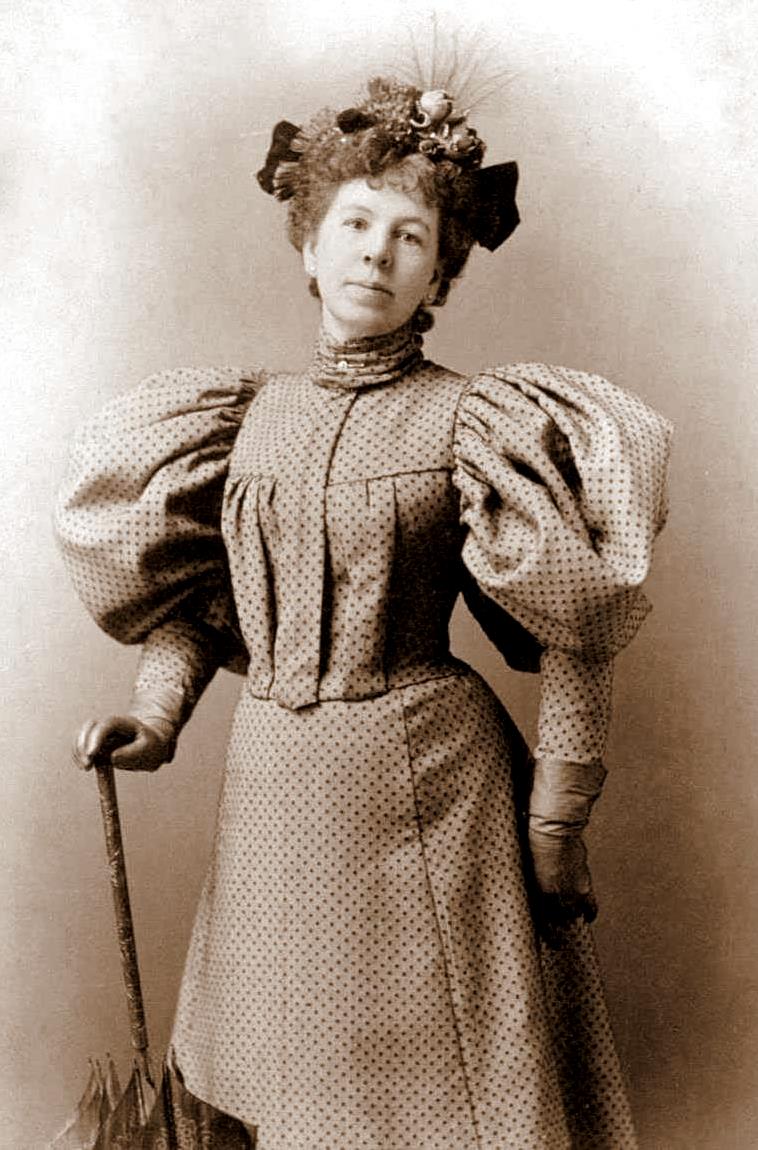
Women’s History Month is a month of the achievements and contributions to humanity throughout history. Clara Shortridge Foltz was the first lawyer on the West Coast and pioneered the idea of public defenders. Paving the way for other women in the law profession by fighting for entrance to the state bar and fair treatment within it, laying the foundation for future generations of women.
Foltz was born on July 16, 1849, in Milton, Indiana to Talitha and Elias Willetts Shortridge, a preacher and lawyer, respectively. The family moved to Mount Pleasant, where she would attend a co-educational school, which was quite rare at the time. At 15 years old, Foltz would elope with Jeremiah D. Foltz, a FFarmer and Civil War veteran. She would then move to San Jose with her husband and five children in 1874.
Two years later after moving, she would divorce her husband and face the responsibility of supporting her family. At 27 years of age, she was already respected and well-known within her community. She had been a suffragist advocating for expanding rights and known as a “brilliant” speaker on sexual equality. Foltz began her interest and fascination with law ever since her childhood by trying to pursue a legal career. Foltz would note at the start of her attempt to join, she had no idea of the hardships to come.
Foltz’s first hurdle was to take the bar examination in California but California law at the time only allowed white males to become members of the bar. To remedy this issue, Foltz would write an amendment to section 275 of the Code of Civil Procedure which sets out the qualifications of lawyers in California. Her changes would change the working qualifications from “any white male citizen” to “any citizen or person,” allowing any gender or race to apply for the bar. The amendment would be known as the Woman’s Lawyer’s Bill. While there would be a small amount of pushback to the deletion of racial restriction against the bill, it still passed substantially by a vote in the Senate.
Despite this win, the fight for the bill had not ended there; it would still need to be signed by the governor in which opponents of the bill would attempt to convince the governor claiming they should not thrust this duty of law upon women. Opponents would claim the bill is dead to be forgotten, but Foltz herself would move to convince the governor herself. She entered his office and amongst the crowd of legislators that swarmed, the governor politely asked him to sign it, aided by his clerk the governor fished the bill out from his stacks of paper and signed the paper right there and then.
To advance her career and education, Foltz would apply to the Hastings College of the Law in San Francisco. Their standards did not include any references to a candidate’s sex, perhaps because they did not ever consider that a woman would ever apply and attempt to enroll at their school. Foltz would pay a ten-dollar tuition fee and began classes on Jan. 9, 1879. When she returned to class the next day, however, she was met by the janitor, who informed her that he had been ordered to bar her from entering the building because it was a law school and she was a woman.
Unbothered, Clara would obtain a note from founder Judge Hastings directing the janitor to let her inside. The note was a conditional entry only as it was subject to approval of the directors of the college. Her admission was short-lived as the board of directors would lay down their judgment denying her application. In addition, they would add a resolution to their standards stating that women would not be admitted to their school.
To combat this barrier, Foltz would work with her ally Laura de Force Gordon and together sued the school. But they received heavy resistance in their attempt to be admitted. To advance their cause, they would write an amendment to the California state Constitution that no person would be disqualified from entering any lawful business vocation or profession. Using the Woman lawyer bill and soon to be ratified equal opportunity in employment statement in the constitution, Foltz and Gorden would be able to argue that if women could be lawyers, then they absolutely could attend law school. Chief Justice of California Robert F. Morrison agreed and in Foltz V. Hoge he would rule in their favor so they would be admitted into school. The case would be appealed. In response to this, Foltz would study and pass the California State Supreme Court bar exam, allowing her to argue about her case and win the case. Clara’s wins would permanently carve out a path for the women of California allowing any woman to take the BAR and attend law school without discrimination and unjust barriers forever opening the legal career for women on the west coast.
Foltz would secure admission for all qualified women to Hasting, paving the way forward for any future female lawyers to follow in her footsteps. Her work and contributions echo decades, protecting and fostering women’s careers and education across California. Clara’s contributions and trailblazer nature should be an inspiration and encouragement for all for changing the norm and not standing by unjust rules that may be set to bar us from our human dignity and our rights.